Body Protection Compound-157
A 15-amino-acid peptide fragment derived from human gastric juice, studied extensively for tissue-repair signaling in preclinical models.
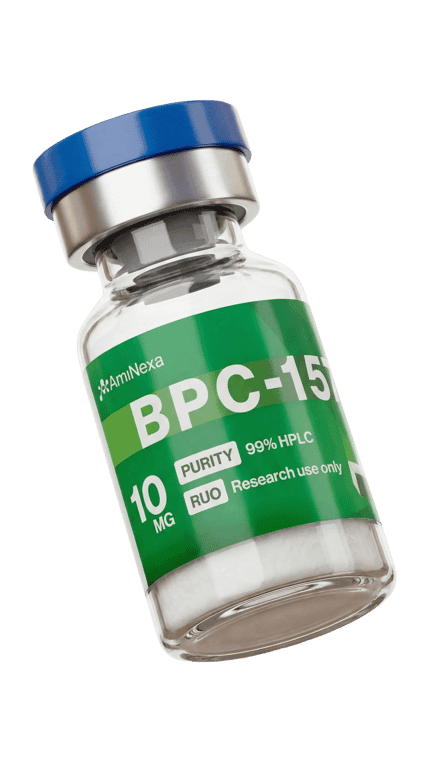
How BPC-157 Works
Angiogenic Signaling
Upregulates vascular endothelial growth factor (VEGF) expression, promoting new blood vessel formation in damaged tissue models. This mechanism accelerates nutrient and oxygen delivery to injury sites.
Nitric Oxide Modulation
Interacts with the NO system to maintain endothelial function and vascular tone. BPC-157 has shown the ability to counteract both NOS inhibition and NO-donor overactivity in experimental settings.
Growth Factor Expression
Enhances expression of EGF, HGF, and other growth factors involved in fibroblast migration and collagen deposition, pathways critical for tendon, ligament, and mucosal repair in animal studies.
BPC-157 demonstrates cytoprotective activity across multiple organ systems through upregulation of growth factor expression and angiogenic pathways.
Clinical Research
Brain-gut axis and pentadecapeptide BPC 157: Theoretical and practical implications
Sikiric P, et al.
Demonstrated multi-organ cytoprotective effects through modulation of dopamine and serotonin systems alongside growth-factor upregulation.
The promoting effect of pentadecapeptide BPC 157 on tendon healing involves tendon outgrowth, cell survival, and cell migration
Chang CH, et al.
BPC-157 significantly enhanced tendon-to-bone healing and promoted fibroblast outgrowth in a dose-dependent manner.
BPC 157 and Standard Angiogenic Growth Factors
Seiwerth S, et al.
BPC-157 upregulated VEGF, EGF, and related growth factors, demonstrating a coordinated angiogenic response not seen with single growth-factor treatments.
Research Applications
Fibroblast migration
Gastric protection pathways
VEGF-mediated signaling
Dopamine/serotonin modulation
Molecular Profile
Safety Profile
BPC-157 has been extensively studied in preclinical animal models with a favorable safety profile. No organ toxicity has been reported at standard research doses across multiple rodent studies.
Dose-dependent: higher concentrations may increase local tissue response
Reconstitution quality affects tolerability in animal models
Route of administration (subcutaneous vs. intraperitoneal) influences local effects
Use bacteriostatic water for reconstitution
Rotate injection sites in animal models
Start with lower doses to assess tolerance
Limited human clinical trial data available
Not evaluated by regulatory agencies for therapeutic use
Potential interactions with anticoagulant compounds in research
Not recommended for use in pregnant or lactating animal models
Frequently Asked
Ready to begin research?
Access BPC-157 through the AmiNexa catalog. All compounds ship via cold-chain transit with batch-specific Certificate of Analysis.
View BPC-157 Product
Important Research Notice
Not for human consumption. This product is sold exclusively for research and educational purposes. It is not intended to diagnose, treat, cure, or prevent any disease.
All clinical trial data and research findings presented on this page are sourced from peer-reviewed journals and official publications. They are provided for educational reference only and should not be interpreted as medical advice or product claims.
By purchasing this product, you confirm that you are a qualified researcher and will use it in accordance with all applicable laws and regulations.