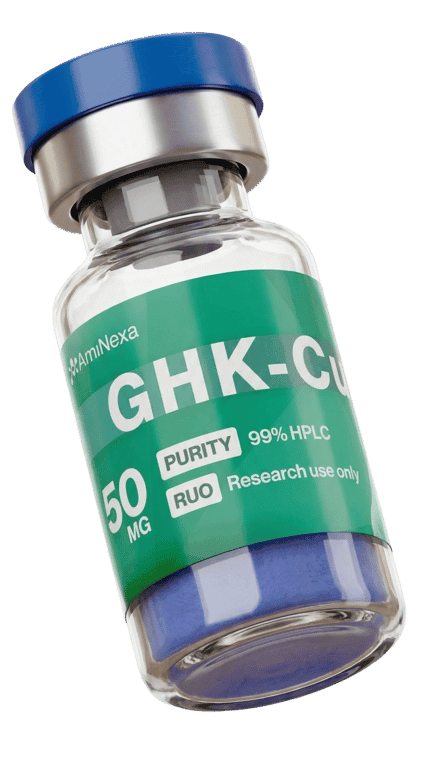
GHK-Cu Copper Peptide
A naturally occurring tripeptide-copper complex first isolated from human plasma, investigated for its role in tissue remodeling and gene expression modulation.
How GHK-Cu Works
Collagen & ECM Synthesis
Stimulates production of collagen types I, III, and V, along with elastin and decorin. GHK-Cu promotes extracellular matrix assembly essential for structural integrity in tissue-remodeling models.
Gene Expression Reset
Genome-wide studies demonstrate that GHK-Cu modulates expression of over 4,000 genes, shifting fibroblast expression profiles toward patterns associated with younger tissue, including upregulation of DNA repair and antioxidant genes.
Anti-Inflammatory Signaling
Suppresses pro-inflammatory cytokines including IL-6 and TNF-α while promoting expression of tissue-repair mediators. This dual action supports resolution of inflammatory states in wound-model research.
GHK-Cu has been shown to reset gene expression of fibroblasts from older donors toward patterns observed in younger cells, affecting over 4,000 genes.
Clinical Research
GHK Peptide as a Natural Modulator of Multiple Cellular Pathways in Skin Regeneration
Pickart L, et al.
Demonstrated that GHK-Cu resets 32% of age-altered gene expression in human fibroblasts, with significant upregulation of collagen and DNA repair pathways.
GHK and DNA: Resetting the Human Genome to Health
Pickart L, Vasquez-Soltero JM
GHK modulates expression of 4,048 human genes, suppressing fibrinogen synthesis by 2-fold and activating ubiquitin-proteasome system components.
Copper-GHK increases integrin expression and p63 positivity
Kang YA, et al.
GHK-Cu treatment increased integrin expression and p63-positive basal cells, indicating enhanced proliferative capacity in skin models.
Research Applications
ECM reconstitution
Genomic profiling
Cytokine modulation
Re-epithelialization
Molecular Profile
Safety Profile
GHK-Cu is a naturally occurring peptide-copper complex found in human plasma, saliva, and urine. Its endogenous origin contributes to a well-characterized and favorable safety profile in both topical and injectable research models.
Copper content is tightly bound to the peptide backbone, limiting free copper toxicity
Concentration-dependent: higher doses may increase localized effects
Topical vs. injectable routes produce different response profiles
Use at recommended research concentrations
Blue discoloration is a normal property of copper complexes
Store reconstituted solutions protected from light to maintain stability
Wilson's disease models: copper accumulation may confound results
Avoid combining with strong chelating agents in experimental protocols
Monitor copper levels in chronic-exposure study designs
Not evaluated for reproductive toxicity
Frequently Asked
Ready to begin research?
Access GHK-Cu through the AmiNexa catalog. All compounds ship via cold-chain transit with batch-specific Certificate of Analysis.
View GHK-Cu Product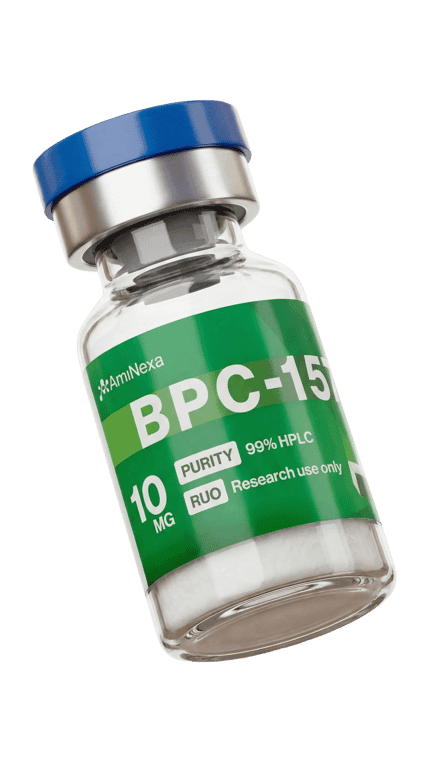
Important Research Notice
Not for human consumption. This product is sold exclusively for research and educational purposes. It is not intended to diagnose, treat, cure, or prevent any disease.
All clinical trial data and research findings presented on this page are sourced from peer-reviewed journals and official publications. They are provided for educational reference only and should not be interpreted as medical advice or product claims.
By purchasing this product, you confirm that you are a qualified researcher and will use it in accordance with all applicable laws and regulations.