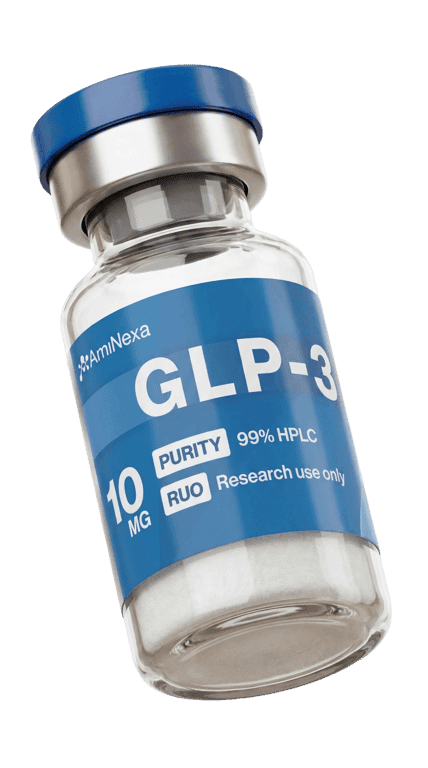
GLP-3 Glucagon-Like Peptide
An engineered glucagon-like peptide analog designed for enhanced metabolic half-life and insulin-sensitizing activity in research models.
How GLP-3 Works
Incretin Receptor Agonism
Binds to GLP-1 receptors on pancreatic beta cells, activating adenylyl cyclase and raising intracellular cAMP levels. This glucose-dependent mechanism enhances insulin secretion only when blood glucose is elevated.
Gastric Motility Regulation
Activates vagal afferents to reduce gastric emptying rate, extending nutrient absorption time and blunting postprandial glucose spikes. This mechanism is a primary contributor to glycemic control in metabolic studies.
Beta-Cell Preservation
Research models indicate GLP receptor activation promotes beta-cell proliferation and inhibits apoptosis, potentially preserving insulin-secretory capacity under metabolic stress conditions.
GLP analogs demonstrate significant glycemic control through dual mechanisms: enhanced insulin secretion from pancreatic beta cells and delayed gastric emptying.
Clinical Research
Mechanisms of Action and Therapeutic Application of Glucagon-like Peptide-1
Drucker DJ
Comprehensive review establishing GLP-1 receptor agonism as a multi-target metabolic intervention affecting pancreatic, gastric, and central nervous system pathways.
Incretin hormones: Their role in health and disease
Nauck MA, Meier JJ
Demonstrated that incretin-based therapies produce clinically meaningful HbA1c reductions and weight management effects through complementary mechanisms.
Research Applications
Insulin sensitization
Energy homeostasis
Emptying rate studies
Beta-cell survival
Molecular Profile
Safety Profile
GLP-1 receptor agonists have a well-characterized safety profile from extensive clinical development. Common effects are predominantly gastrointestinal and dose-related, typically diminishing with continued exposure in preclinical models.
GI effects are dose-dependent and typically diminish over 1–2 weeks
Slow dose titration significantly reduces initial adverse effects
Fasting state at time of administration affects tolerability
Gradual dose escalation in research protocols
Administer to fasted subjects when possible
Monitor food intake as a pharmacodynamic endpoint
Potential risk of pancreatitis in susceptible animal strains
Not studied in combination with DPP-4 inhibitors in most models
Thyroid C-cell effects reported with chronic high-dose GLP-1R agonism in rodents
Contraindicated in models with medullary thyroid carcinoma history
Frequently Asked
Ready to begin research?
Access GLP-3 through the AmiNexa catalog. All compounds ship via cold-chain transit with batch-specific Certificate of Analysis.
View GLP-3 Product
Important Research Notice
Not for human consumption. This product is sold exclusively for research and educational purposes. It is not intended to diagnose, treat, cure, or prevent any disease.
All clinical trial data and research findings presented on this page are sourced from peer-reviewed journals and official publications. They are provided for educational reference only and should not be interpreted as medical advice or product claims.
By purchasing this product, you confirm that you are a qualified researcher and will use it in accordance with all applicable laws and regulations.