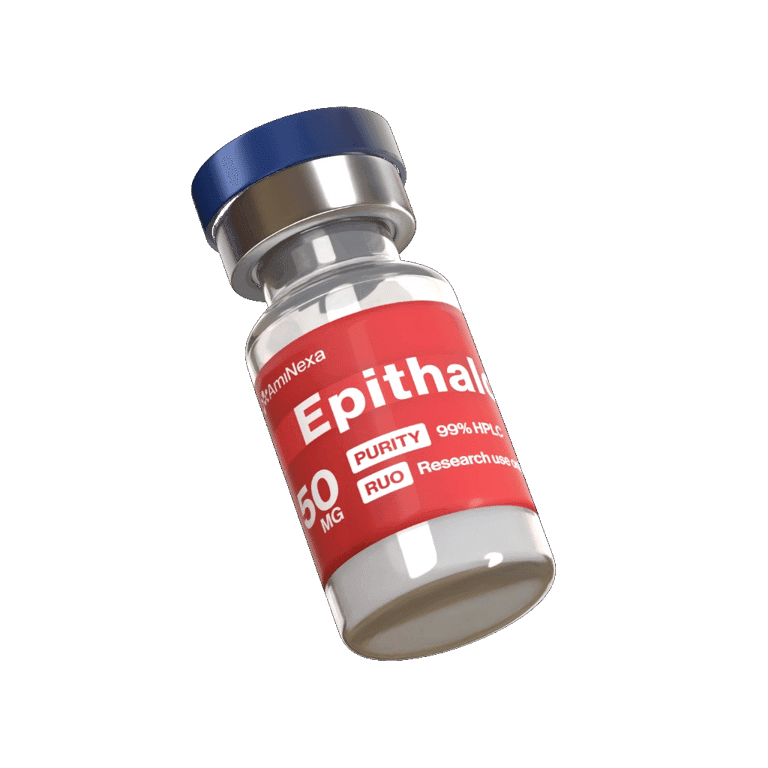
Epithalon (AEDG Peptide)
A synthetic tetrapeptide (Ala-Glu-Asp-Gly) studied for its interaction with telomerase activity and pineal gland function in cellular aging models.
How Epithalon Works
Telomerase Activation
Epithalon has been shown to activate telomerase (hTERT) in human somatic cells, elongating telomeres and extending the replicative lifespan of fibroblast cultures beyond the Hayflick limit in controlled laboratory settings.
Pineal Gland Modulation
Studies indicate epithalon influences melatonin synthesis by the pineal gland, potentially restoring circadian rhythm patterns that degrade with age. This neuroendocrine pathway connects to broader age-related hormonal regulation.
Antioxidant Gene Expression
Research models demonstrate upregulation of endogenous antioxidant enzymes including superoxide dismutase (SOD) and glutathione peroxidase, contributing to cellular stress resistance in aging paradigms.
Epithalon has been reported to activate telomerase reverse transcriptase (hTERT) in human somatic cells, a mechanism associated with chromosomal stability and replicative lifespan extension.
Clinical Research
Epithalon peptide induces telomerase activity and telomere elongation in human somatic cells
Khavinson VK, et al.
Epithalon activated telomerase in human pulmonary fibroblasts, elongating telomeres by 33% and enabling cells to surpass the Hayflick limit without malignant transformation.
Effect of Epithalon on biomarkers of aging, life span and spontaneous tumor incidence in female Swiss-derived SHR mice
Anisimov VN, et al.
Chronic epithalon administration was associated with normalized melatonin rhythms and modulated expression of aging-associated biomarkers in a rodent longevity model.
Research Applications
hTERT activation
Melatonin regulation
Senescence markers
SOD/GPx expression
Molecular Profile
Safety Profile
Epithalon is a small tetrapeptide with a favorable safety profile in published animal studies. No significant toxicity has been reported at standard research doses in chronic administration models.
Small peptide size (4 amino acids) reduces immunogenic potential
Circadian effects may vary with time of administration
Chronic vs. acute dosing produces different biomarker responses
Evening administration may align with melatonin rhythm effects
Monitor circadian biomarkers in longitudinal studies
Use consistent timing across treatment groups
Limited human clinical trial data; primarily animal model evidence
Potential interaction with exogenous melatonin supplementation in models
Long-term telomerase activation studies should monitor for neoplastic endpoints
Not evaluated in immunocompromised animal strains
Frequently Asked
Ready to begin research?
Access Epithalon through the AmiNexa catalog. All compounds ship via cold-chain transit with batch-specific Certificate of Analysis.
View Epithalon Product
Important Research Notice
Not for human consumption. This product is sold exclusively for research and educational purposes. It is not intended to diagnose, treat, cure, or prevent any disease.
All clinical trial data and research findings presented on this page are sourced from peer-reviewed journals and official publications. They are provided for educational reference only and should not be interpreted as medical advice or product claims.
By purchasing this product, you confirm that you are a qualified researcher and will use it in accordance with all applicable laws and regulations.