Melanotan II (MT-II)
A cyclic heptapeptide analog of α-melanocyte-stimulating hormone (α-MSH) studied for melanocortin receptor pharmacology and binding kinetics.
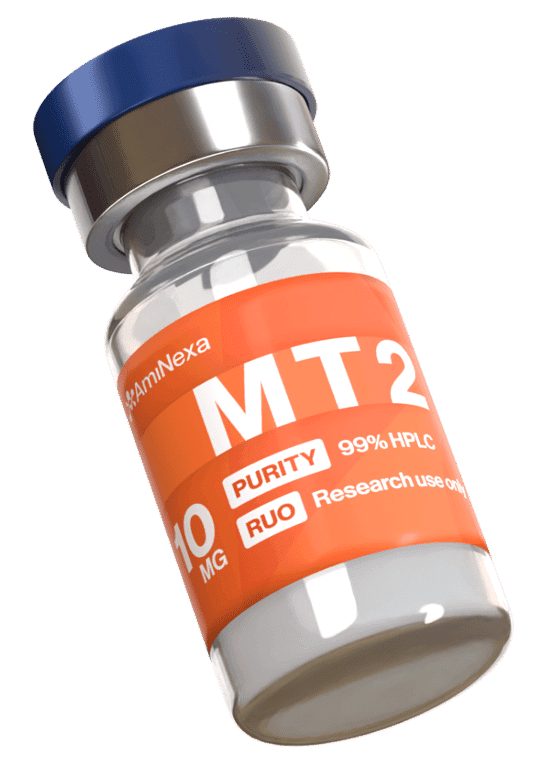
How MT2 Works
Melanocortin Receptor Binding
MT-II binds to melanocortin receptors (MC1R–MC5R) with varying affinities, activating Gs-coupled adenylyl cyclase signaling and elevating intracellular cAMP. This non-selective profile makes it a versatile pharmacological tool.
MC1R-Mediated Melanogenesis
Activation of MC1R on melanocytes triggers the cAMP/PKA/CREB signaling cascade, upregulating tyrosinase and related enzymes. This pathway is the primary mechanism studied in pigmentation research models.
MC4R Central Signaling
MC4R activation in hypothalamic nuclei modulates energy homeostasis and appetite regulation pathways. MT-II serves as a reference agonist in studies characterizing central melanocortin circuit function.
MT-II is a non-selective melanocortin receptor agonist that binds MC1R, MC3R, MC4R, and MC5R, making it a valuable tool for studying the diverse physiological roles of the melanocortin system.
Clinical Research
Melanocortin peptide therapeutics: historical milestones, clinical studies and commercialization
Hadley ME, Dorr RT
Comprehensive review establishing MT-II as a foundational research tool for melanocortin receptor pharmacology, documenting receptor binding profiles and downstream signaling characterization.
Melanocortin receptors: Ligands and proteochemistry
Hruby VJ, et al.
Detailed structure-activity analysis of MT-II and derivatives, establishing the cyclic lactam bridge as critical for receptor affinity and metabolic stability.
Research Applications
Binding kinetics
Pigmentation pathways
Hypothalamic circuits
Structure-activity
Molecular Profile
Safety Profile
MT-II's non-selective melanocortin receptor profile produces effects across multiple physiological systems. Published human studies report predominantly mild, self-limiting adverse effects.
Non-selective receptor profile amplifies off-target effects
Dose-dependent: lower initial doses significantly reduce flushing and nausea
Effects typically diminish with repeated exposure
Start with minimal effective dose for receptor characterization
Gradual dose escalation reduces initial adverse effects
Administration timing affects central vs. peripheral effects
Non-selective MC receptor activation may confound single-receptor studies
Potential cardiovascular effects via MC3R/MC4R activation
Pigmentary changes are irreversible in some models
Not evaluated for teratogenic potential
Frequently Asked
Ready to begin research?
Access MT2 through the AmiNexa catalog. All compounds ship via cold-chain transit with batch-specific Certificate of Analysis.
View MT2 Product

Important Research Notice
Not for human consumption. This product is sold exclusively for research and educational purposes. It is not intended to diagnose, treat, cure, or prevent any disease.
All clinical trial data and research findings presented on this page are sourced from peer-reviewed journals and official publications. They are provided for educational reference only and should not be interpreted as medical advice or product claims.
By purchasing this product, you confirm that you are a qualified researcher and will use it in accordance with all applicable laws and regulations.